
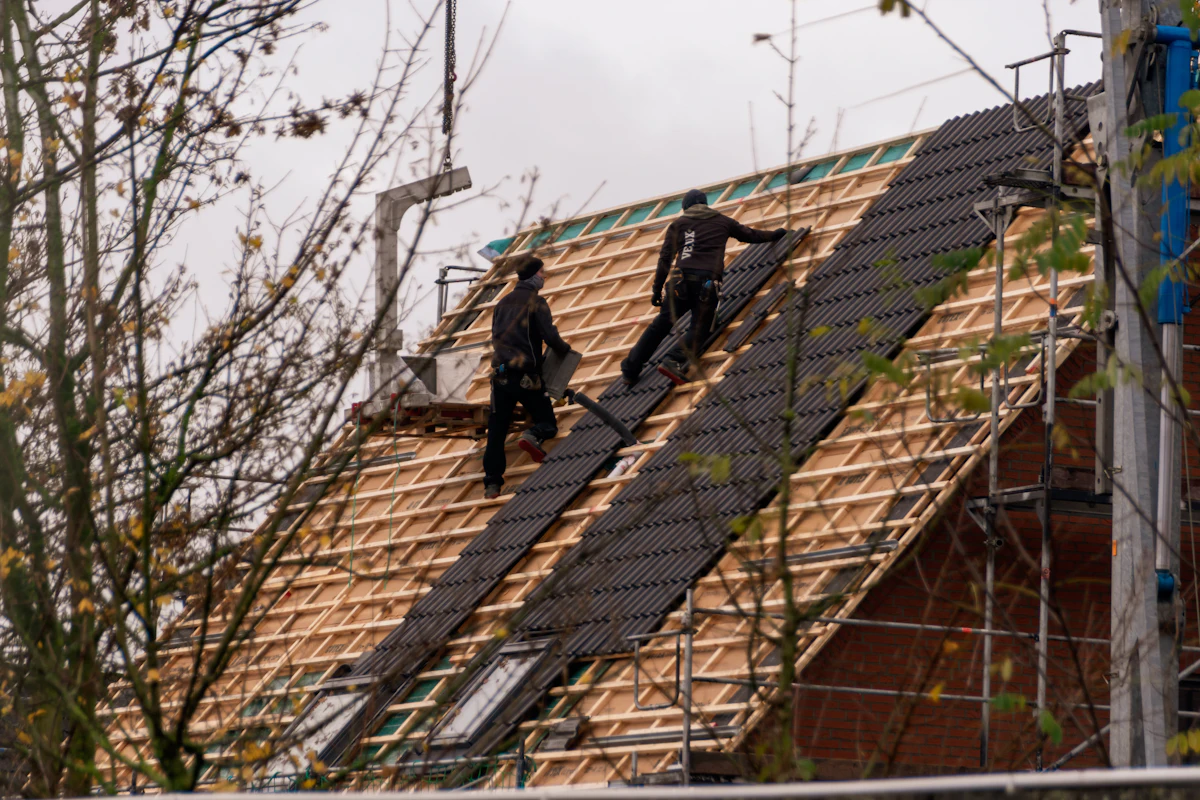
Do I need a new roof, or will a repair do?
A repair is enough when the damage is local: a few slipped tiles, a loose ridge, one failed flashing. A roof replacement makes sense when the fixings, battens or underlay are failing across the whole roof, or when the same roof keeps needing patches.
Age is a clue, not a verdict. Crawley's first neighbourhoods were built between 1949 and the early 1960s, so an original roof there is now roughly 65 to 75 years old. One UK roofing guide gives concrete tiles 40–60 years and clay tiles 60–90, but the tiles often outlast the nails, battens and felt beneath them. Signs that point towards re-roofing:
- Tiles slipping all over the roof, not in one spot, which usually means the nails or battens have gone.
- Daylight or torn, sagging felt visible from inside the loft.
- A dip or sag in the roof line, which needs the timbers checked.
- Repairs every winter that add up to more than they should.
If it's one leak or a handful of tiles, start with roof repairs instead.
How much does a new roof cost?
The UK average is around £8,000, and most homeowners pay between £4,000 and £19,000, depending on the roof's size, shape and covering. These are general ranges, not quotes, from Checkatrade's roof replacement cost guide (updated October 2026).
| Roof replacement | General range (plus VAT) | Per m² |
|---|---|---|
| Gable roof (two slopes), about 64m² | £7,000–£16,250 | £110–£260 |
| Hip roof (slopes on all sides), about 64m² | £9,250–£18,000 | £145–£285 |
| Flat roof, about 32m² | £2,800–£7,500 | £45–£120 |
| New roof structure (timbers as well as covering) | £6,500–£20,000+ | — |
Scaffolding is often priced separately: the same guide puts set-up, removal and weekly hire at £700–£1,300. Slate and clay cost more than concrete tiles, and a roof with hips, valleys and dormers costs more than a plain one. Your roofer prices the job after seeing it, so get the quote in writing with the scaffolding, waste removal and VAT shown.
What does re-roofing a pitched roof involve?
Pitched roofing work on a re-roof means stripping the old covering back to the rafters and rebuilding it. The roofer removes the tiles or slates, battens and old felt, checks the timbers, then fits a new membrane, new battens and the new covering.
Ridges, hips, valleys and lead flashings are renewed at the same time, and it is the cheapest moment to replace gutters and fascias because the scaffolding is already up. A typical roof replacement takes up to a week, longer if the weather turns or the timbers need repair.
Which covering: concrete tiles, clay tiles or slate?
Usually the one the house already has, so the roof matches its neighbours and the timbers carry the same load. Changing material is possible, but it can bring in extra rules.
A new covering that makes the roof 15% or more heavier needs Building Regulations approval, because the structure has to be checked. In a conservation area or on a listed building the council may also want the original material kept: see the notes for Horsham and Haywards Heath, where stone and slate roofs are common.
Does a new roof need Building Regulations approval?
Yes, in almost every case. The Planning Portal says no building control application is normally needed when less than half the roof, and less than a quarter of the building's outer shell, is affected; a full re-roof goes past that limit, so approval is needed and the loft insulation may have to be brought up to current standards.
There are two routes. Your roofer can apply to the council's building control, or a roofer registered with a competent person scheme such as CompetentRoofer or NAPIT can self-certify the work. Ask which route they use before work starts, and keep the certificate, because a buyer's solicitor is likely to ask for it when you sell.
Do I need planning permission to replace a roof?
Not usually. Checkatrade's guide says planning permission isn't normally needed when the new roof has a similar design and materials, and suggests checking with your local planning authority to be sure.
Listed buildings are different. Historic England advises checking with the council's conservation officer first, and warns that unauthorised works to a listed building are a criminal offence. This page isn't legal advice.
What about replacing a flat roof?
A flat roof replacement is a smaller job: the old covering comes off, the deck is checked and replaced where it's wet, and a new felt, EPDM rubber or GRP covering goes on. Re-felting an average garage roof costs about £1,000–£2,000.
The flat roofing page compares the three materials and explains when a patch is enough.
Will my insurance pay for a new roof?
Only if an insured event caused the damage. Home insurance can cover roof damage from a storm or a fallen tree, but it won't usually pay for a roof that has worn out with age. Whether a claim succeeds is your insurer's decision, not the roofer's.
Finding a roofer for a new roof in Crawley
A re-roof is worth more than one quote. Call the number on this page to talk it through with one of the roofing contractors covering Crawley, then compare their written quote with at least one other. Citizens Advice explains how to check a trader before you sign anything.